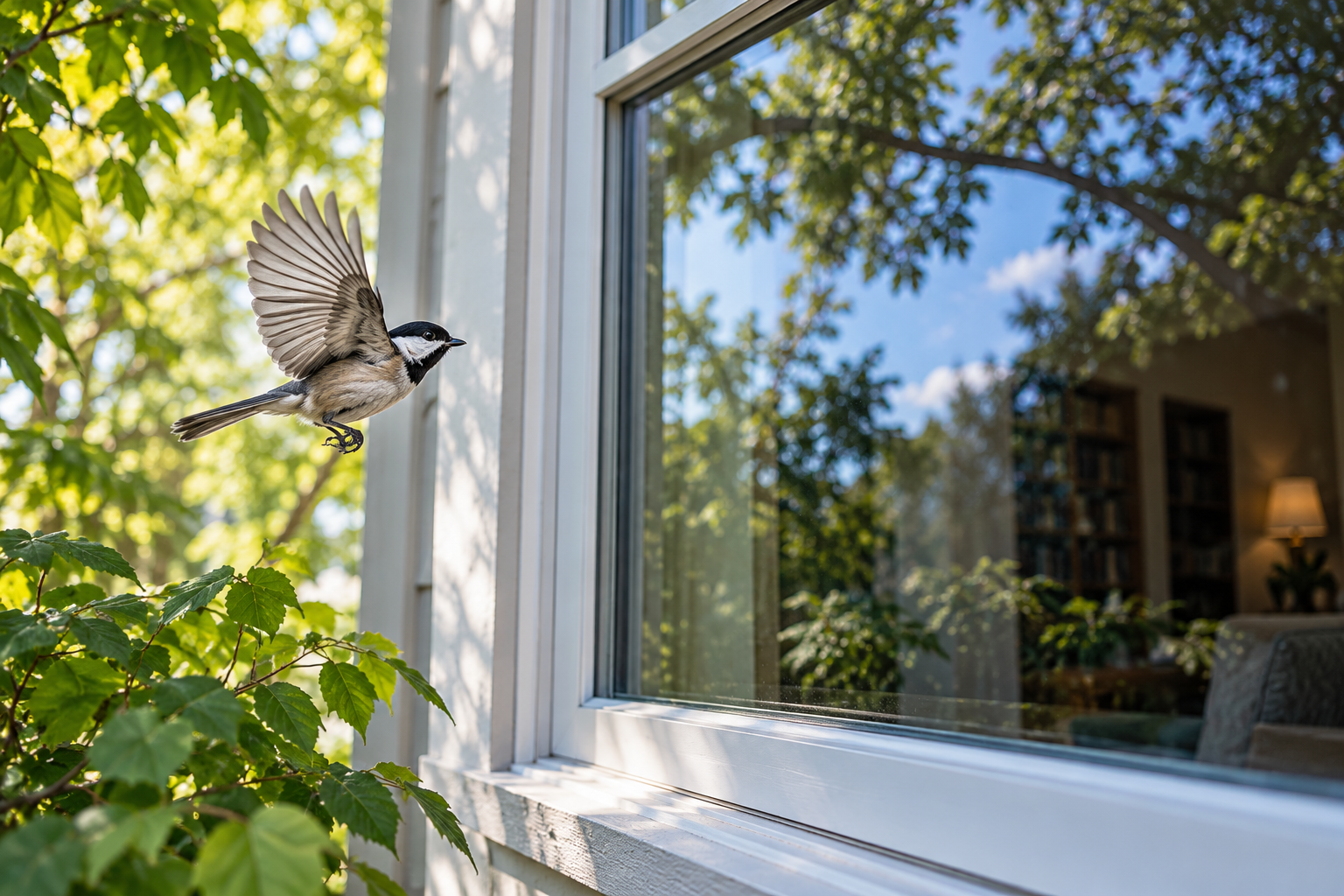
Why window reflections confuse a bird
A window can reflect trees, show a route through to the other side, or change appearance as light and viewing angle shift. Field and flight studies show how to make that barrier visible to birds.

About the author
I watch neighborhood birds in Ottawa before work, during errands and from a kitchen window that overlooks a hedge. I work in community recreation and value hobbies that fit into the spaces between commitments. My first bird notebook was a list of names; it became more interesting when I began describing behavior.
Birds on the Block focuses on common birds, ordinary places and the pleasure of looking more carefully. I write about short walks, sitting still, keeping useful observation notes and accepting an uncertain identification. I treat wildlife respectfully and prefer watching a bird's activity to trying to stage its photograph.
My notebooks include weather, time, quick shapes and occasional drawings that require a generous imagination. Away from birdwatching I enjoy swimming, library visits and making hearty lunches for long park afternoons. A particularly good morning may involve no new species at all.
A window can reflect trees, show a route through to the other side, or change appearance as light and viewing angle shift. Field and flight studies show how to make that barrier visible to birds.
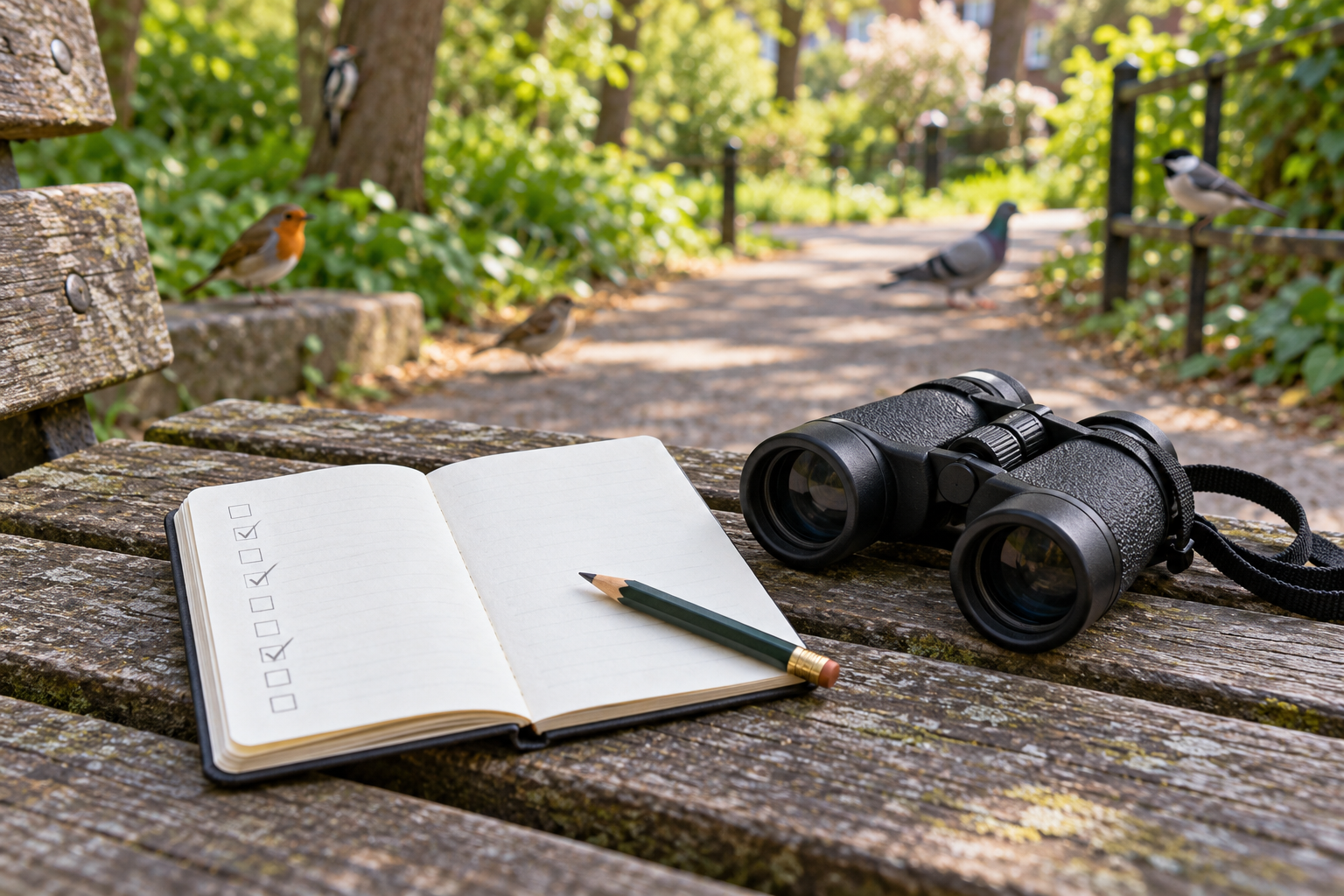
A complete bird checklist records the search around a sighting: what the observer could identify, where and how long they looked, and which species went undetected. That context is valuable without turning non-detection into proof of absence.
The notebook looked impressive if you read only the names. A few unusual sightings, several entries copied neatly and a surprising amount of blank space around the birds I actually encountered every week.
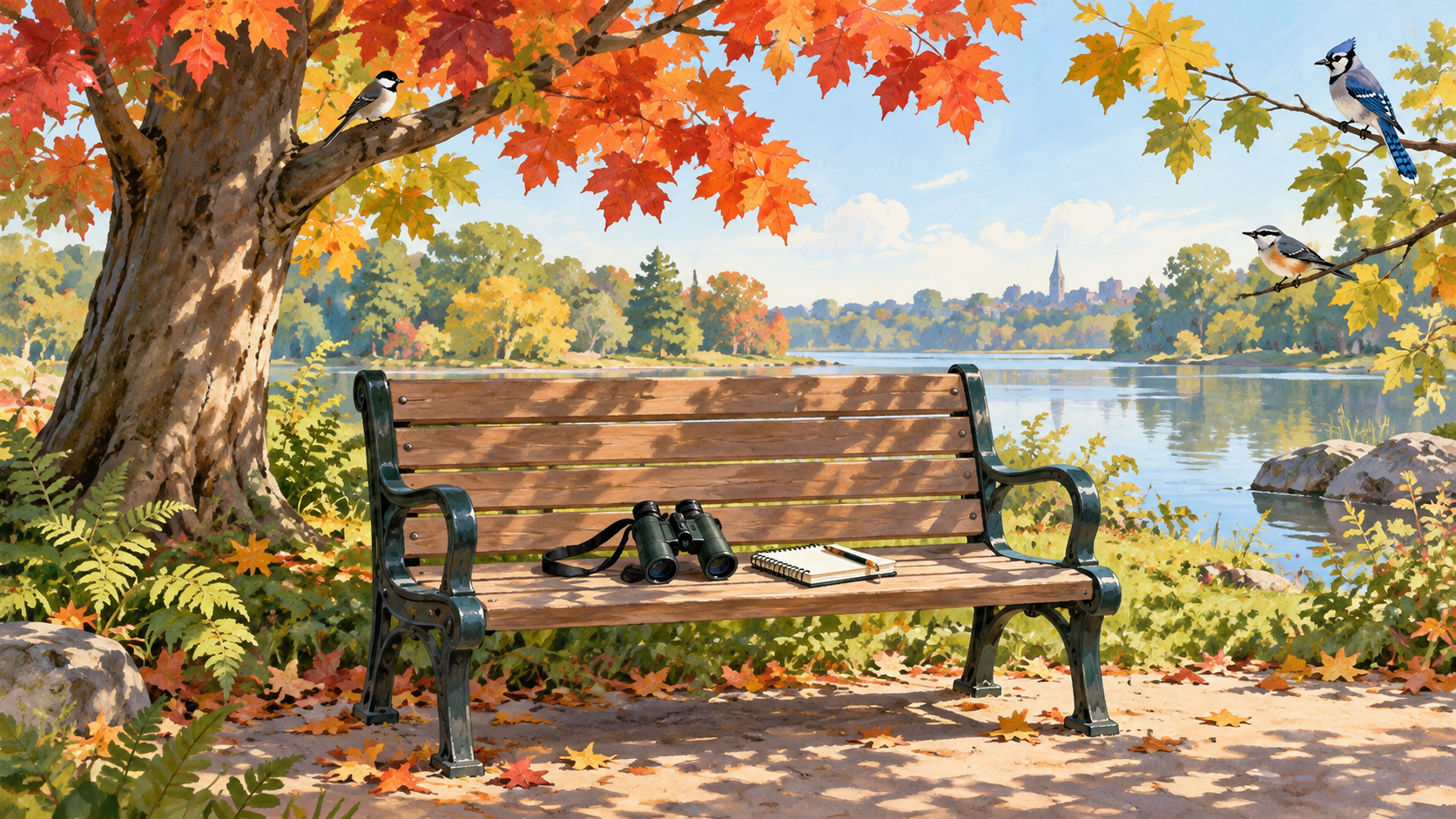
I took a folding idea into the park: perhaps I should acquire more equipment before taking this hobby seriously. Then I sat on a bench and watched the area around it for half an hour.